


Can PTFE be used in industrial bearings?
As a supplier of PTFE industrial products, I often encounter inquiries about the diverse applications of PTFE. One question that frequently arises is whether PTFE can be used in industrial bearings. In this blog post, I'll delve into this topic, exploring the properties of PTFE, its suitability for industrial bearings, and the benefits it brings to this application.
Understanding PTFE
Polytetrafluoroethylene (PTFE) is a synthetic fluoropolymer of tetrafluoroethylene. It is well - known for its unique set of properties that make it a highly sought - after material in various industries. PTFE has an extremely low coefficient of friction, which is one of its most remarkable characteristics. This low friction property means that when two surfaces coated with or made of PTFE slide against each other, there is minimal resistance, reducing wear and tear.
Another important property of PTFE is its chemical resistance. It can withstand a wide range of chemicals, including acids, bases, and solvents, without undergoing significant degradation. This makes it suitable for use in environments where exposure to corrosive substances is a concern. PTFE also has excellent thermal stability, with a high melting point and the ability to maintain its properties over a broad temperature range, from extremely cold to relatively high temperatures.
PTFE in Industrial Bearings
Industrial bearings are crucial components in machinery, responsible for reducing friction between moving parts and supporting loads. The use of PTFE in industrial bearings offers several advantages.
Low Friction and Wear Resistance
The low coefficient of friction of PTFE is a significant advantage in bearing applications. When PTFE is used as a bearing material or as a coating on bearing surfaces, it reduces the frictional forces between the bearing and the shaft or other mating components. This results in less energy consumption, as less power is required to overcome friction. Additionally, the reduced friction leads to lower wear rates, which extends the service life of the bearings. For example, in high - speed rotating machinery, the use of PTFE - based bearings can prevent premature wear and failure, reducing maintenance costs and downtime.
Chemical Resistance
In many industrial settings, bearings are exposed to various chemicals. For instance, in the chemical processing industry, bearings may come into contact with corrosive acids or alkalis. PTFE's excellent chemical resistance ensures that the bearings can withstand these harsh environments without being damaged. This property not only protects the bearings but also helps to maintain the integrity of the entire machinery.
Self - Lubrication
PTFE has self - lubricating properties, which means that it can reduce the need for external lubricants in some applications. This is particularly beneficial in situations where lubrication is difficult or where the presence of lubricants may contaminate the surrounding environment. For example, in food processing or pharmaceutical industries, the use of self - lubricating PTFE bearings can eliminate the risk of lubricant contamination of products.
Types of PTFE Products for Bearings
As a PTFE industrial supplier, we offer a range of PTFE products that can be used in bearing applications.
PTFE Tape
PTFE Tape is a versatile product that can be used in bearings. It can be wrapped around shafts or other bearing components to provide a low - friction surface. PTFE tape is easy to install and can conform to different shapes, making it suitable for a variety of bearing designs. It can also be used as a sealing material to prevent the ingress of contaminants into the bearing.
PTFE Skived Film
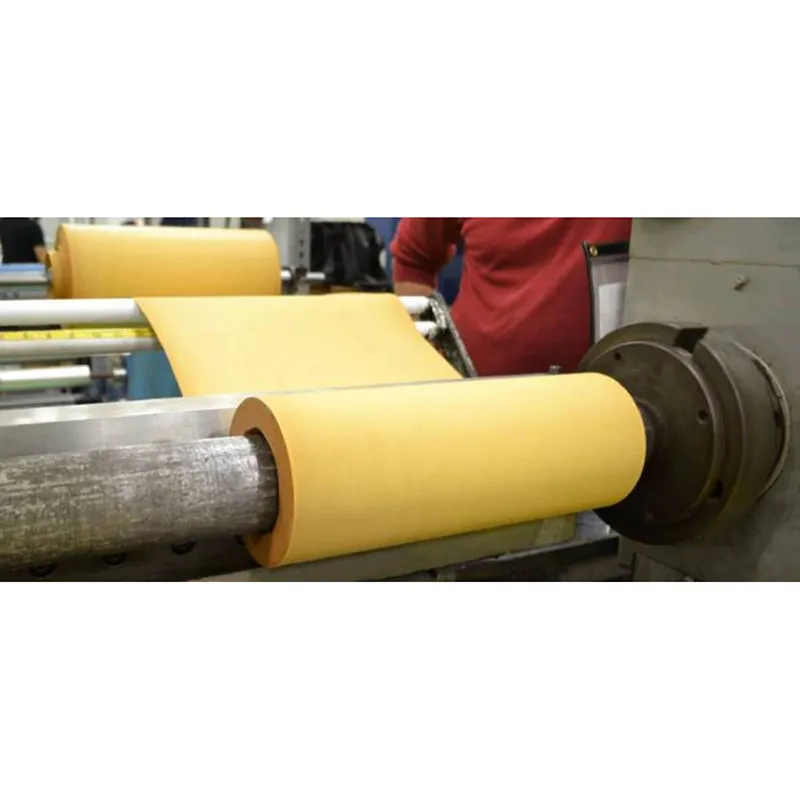
PTFE Skived Film is another option for bearing applications. Skived film is a thin, flat sheet of PTFE that can be used as a liner or facing material in bearings. It offers excellent surface smoothness and low friction, which is ideal for reducing wear and improving the performance of bearings. The film can be cut to the required size and shape, allowing for customized solutions for different bearing requirements.
PTFE High Temperature Cloth
PTFE High Temperature Cloth is suitable for bearings operating in high - temperature environments. The cloth is made of glass fiber fabric coated with PTFE, which combines the high - strength properties of glass fiber with the low - friction and chemical - resistant properties of PTFE. It can be used as a protective cover or a friction - reducing layer in bearings exposed to elevated temperatures.
Challenges and Considerations
While PTFE offers many benefits for industrial bearings, there are also some challenges and considerations.

Mechanical Strength
PTFE has relatively low mechanical strength compared to some traditional bearing materials such as steel. In applications where high loads are involved, additional reinforcement or the use of PTFE in combination with other materials may be necessary. For example, PTFE can be used as a coating on a stronger substrate to take advantage of its low - friction properties while relying on the substrate for load - bearing capacity.
Cost
PTFE products can be more expensive than some other bearing materials. However, the long - term benefits, such as reduced wear, lower maintenance costs, and extended service life, often justify the higher initial investment. When evaluating the cost - effectiveness of using PTFE in bearings, it is important to consider the total cost of ownership over the life of the machinery.
Conclusion
In conclusion, PTFE can be effectively used in industrial bearings, thanks to its low friction, chemical resistance, and self - lubricating properties. As a PTFE industrial supplier, we offer a range of PTFE products, including PTFE Tape, PTFE Skived Film, and PTFE High Temperature Cloth, that are suitable for different bearing applications.
If you are considering using PTFE in your industrial bearings or have any questions about our PTFE products, we encourage you to contact us for a detailed discussion. Our team of experts can provide you with the information and support you need to make the right choice for your specific requirements.
References
- "Polytetrafluoroethylene (PTFE): Properties, Applications, and Manufacturing", Journal of Materials Science.
- "Industrial Bearings: Design, Selection, and Maintenance", McGraw - Hill.
- "Advances in Polymer Science for Bearing Applications", Polymer Engineering and Science.


