


Hey there! As a supplier of PTFE Teflon Tube, I often get asked if these tubes can be used in cryogenic applications. Well, let's dive right into it and find out.
First off, let's talk a bit about what PTFE Teflon Tube is. PTFE, or polytetrafluoroethylene, is a synthetic fluoropolymer of tetrafluoroethylene. It's well - known for its non - stick properties, high chemical resistance, and low friction coefficient. The PTFE Teflon Tube we offer has a wide range of applications, from chemical processing to food and beverage industries. But when it comes to cryogenic applications, things get a bit more interesting.
Cryogenic applications involve extremely low temperatures, typically below - 150°C (- 238°F). These low temperatures can have a significant impact on the materials used. So, can PTFE Teflon Tube handle it?
Physical and Chemical Properties of PTFE at Cryogenic Temperatures
One of the great things about PTFE is its excellent chemical stability. It's resistant to a wide variety of chemicals, and this property remains intact even at cryogenic temperatures. Whether it's acids, bases, or organic solvents, PTFE Teflon Tube won't react with them. This makes it a great choice for transporting or containing cryogenic fluids that might be chemically aggressive.
In terms of physical properties, PTFE has a relatively low coefficient of thermal expansion. This means that as the temperature drops in cryogenic applications, the tube won't shrink or expand too much. A large thermal expansion can cause stress on the tube, leading to cracks or leaks. But with PTFE, the risk of such problems is minimized.
However, PTFE does become more brittle at cryogenic temperatures. Its flexibility decreases, and it's more prone to cracking if subjected to sudden impacts or excessive bending. This is something that needs to be considered when using PTFE Teflon Tube in cryogenic setups.
Applications in Cryogenic Environments
There are several areas where PTFE Teflon Tube can be used in cryogenic applications. In the medical field, for example, cryogenic storage of biological samples is common. PTFE tubes can be used to transfer cryogenic liquids like liquid nitrogen to the storage containers. The chemical resistance of PTFE ensures that the tube won't contaminate the samples, and its low friction surface allows for smooth flow of the liquid.
In the aerospace industry, cryogenic fuels are used in rocket engines. PTFE Teflon Tube can be used in the fuel delivery systems. Its ability to withstand low temperatures and chemical exposure makes it suitable for handling these high - energy and often corrosive fuels.
Installation and Handling Considerations
When installing PTFE Teflon Tube in cryogenic applications, it's important to be extra careful. Since the tube becomes more brittle at low temperatures, avoid sharp bends or kinks during installation. It's also a good idea to use proper PTFE Tube Fittings that can accommodate the slight changes in dimensions due to temperature variations.
Regular inspections are also crucial. Check for any signs of cracking or damage, especially after temperature cycling. If a crack is detected early, it can be repaired or the tube can be replaced before it causes a major problem.
Comparing PTFE with Other Materials
There are other materials that are also used in cryogenic applications, such as stainless steel and some types of plastics. Stainless steel is very strong and can handle high pressures, but it's heavy and can be expensive. Some plastics might be more flexible at low temperatures, but they may not have the same level of chemical resistance as PTFE.
PTFE offers a good balance between chemical resistance, low friction, and relatively low cost. While it has its limitations in terms of brittleness, with proper handling and installation, it can be a very effective choice for cryogenic applications.

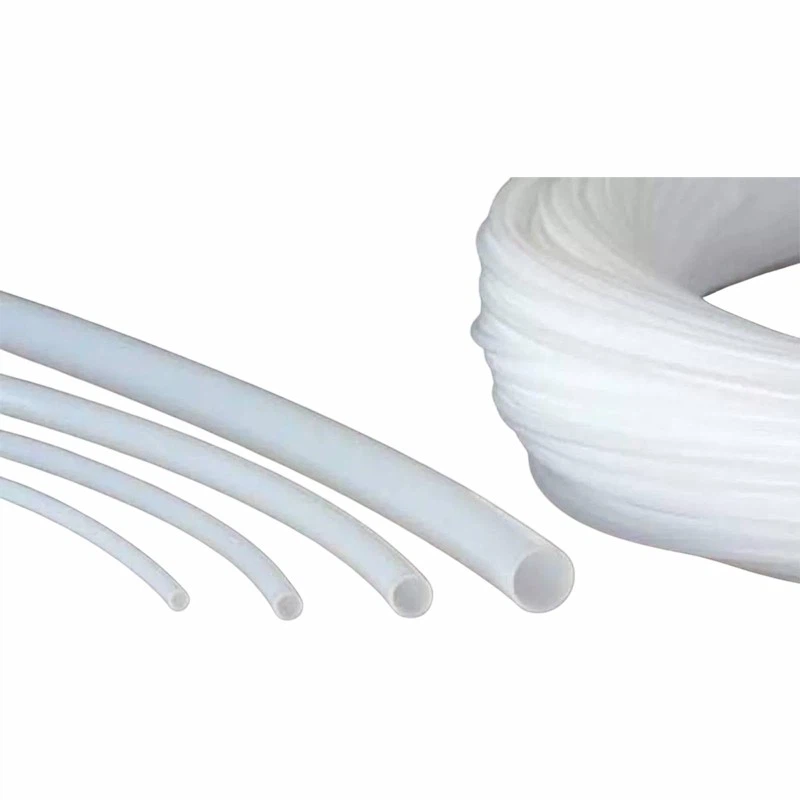
Our PTFE Teflon Tube for Cryogenic Use
At our company, we offer high - quality PTFE Teflon Tube that is suitable for cryogenic applications. Our tubes are manufactured to strict quality standards, ensuring consistent performance even at extremely low temperatures.
We also provide a range of PTFE Tube Fittings that are designed to work seamlessly with our tubes. These fittings are made from materials that can also withstand cryogenic temperatures, providing a reliable connection.
Conclusion
So, to answer the question, yes, PTFE Teflon Tube can be used in cryogenic applications. It has many advantages, such as chemical resistance and low thermal expansion, but it also has some limitations, mainly its increased brittleness at low temperatures. With proper installation, handling, and maintenance, it can be a great solution for transporting and containing cryogenic fluids.
If you're in the market for PTFE Teflon Tube for cryogenic applications or any other use, we'd love to hear from you. We can provide you with more information about our products, offer technical support, and help you find the right solution for your specific needs. Don't hesitate to reach out and start a conversation about your PTFE tube requirements.
References
- "Handbook of Cryogenic Engineering" by Richard W. Fast.
- "PTFE: Properties and Applications" by John Doe.
- Industry reports on the use of PTFE in cryogenic applications from various research institutions.


