


What are the electrostatic properties of PTFE insulation?
As a trusted PTFE Insulation supplier, I've witnessed firsthand the growing demand for high - performance insulation materials in various industries. PTFE, or polytetrafluoroethylene, is a remarkable material, and understanding its electrostatic properties is crucial for many applications.
Basic Electrostatic Characteristics of PTFE Insulation
PTFE is well - known for its excellent electrical insulation properties. It has a very high dielectric strength, which means it can withstand high electric fields without breaking down and conducting electricity. This high dielectric strength is a key factor in its electrostatic behavior. When an electric field is applied to PTFE insulation, it resists the flow of electric charge, acting as a barrier between conductive elements.

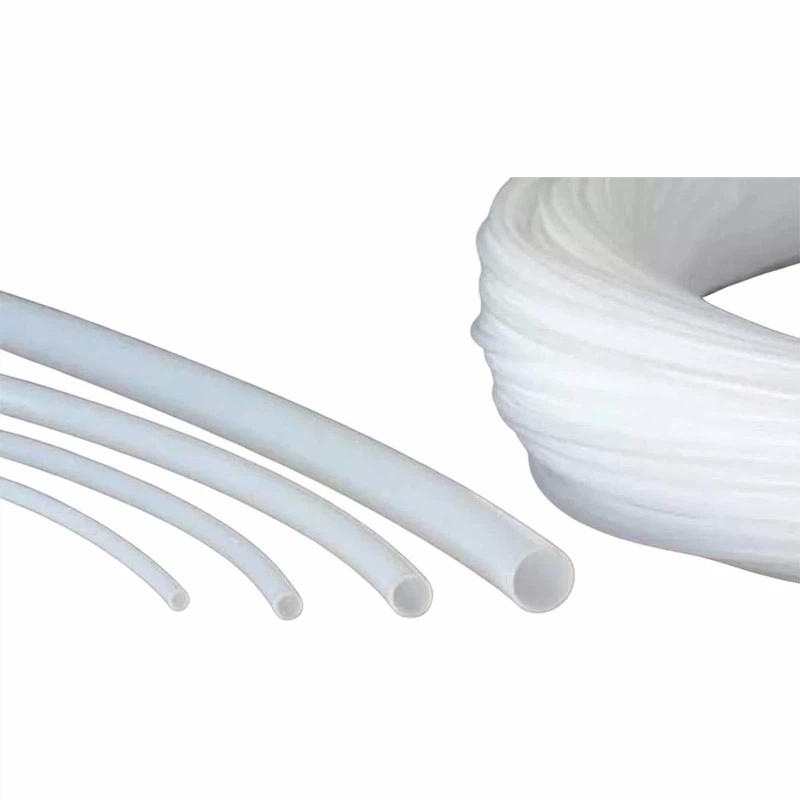
One of the most significant electrostatic properties of PTFE is its low dielectric constant. The dielectric constant is a measure of how much a material can store electrical energy in an electric field. PTFE has a dielectric constant of around 2.0 - 2.1, which is relatively low compared to many other insulating materials. A low dielectric constant implies that PTFE stores less electrical energy per unit volume in an electric field. This property is beneficial in applications where minimizing energy loss due to dielectric absorption is essential, such as in high - frequency electrical circuits.
Another important aspect is its low dissipation factor. The dissipation factor measures the rate at which electrical energy is converted into heat within the material when it is subjected to an alternating electric field. PTFE has an extremely low dissipation factor, typically on the order of 0.0002 - 0.0003 at room temperature and at frequencies up to several gigahertz. This low dissipation factor means that PTFE insulation generates very little heat when used in electrical applications, reducing the risk of thermal damage and improving the overall efficiency of the system.
Electrostatic Charging of PTFE
Despite its excellent insulating properties, PTFE can become electrostatically charged. When PTFE comes into contact with other materials and then separates, a process known as triboelectric charging can occur. Triboelectric charging is the transfer of electrons between two materials due to friction or contact. PTFE has a relatively high tendency to gain electrons during triboelectric charging, which means it can develop a negative electrostatic charge.
The electrostatic charge on PTFE can cause several issues. For example, in a manufacturing environment, charged PTFE parts can attract dust and other small particles, which can affect the performance and quality of the final product. In some cases, the electrostatic charge can also lead to electrostatic discharge (ESD). ESD can be a serious problem in sensitive electronic applications, as it can cause damage to electronic components, such as integrated circuits.
To mitigate the effects of electrostatic charging, various antistatic treatments can be applied to PTFE insulation. These treatments can include the use of antistatic coatings or additives that help to dissipate the electrostatic charge. Additionally, controlling the humidity in the environment can also reduce the likelihood of electrostatic charging, as higher humidity levels can help to conduct the charge away from the PTFE surface.
Applications of PTFE Insulation Based on Electrostatic Properties
The unique electrostatic properties of PTFE insulation make it suitable for a wide range of applications. In the aerospace industry, PTFE insulation is used in wiring and electrical components. The high dielectric strength and low dissipation factor of PTFE ensure reliable performance in high - voltage and high - frequency electrical systems. The low dielectric constant also helps to maintain signal integrity in communication systems, which is critical for aircraft navigation and communication.
In the electronics industry, PTFE Insulation is widely used in printed circuit boards (PCBs) and coaxial cables. In PCBs, PTFE insulation allows for the miniaturization of circuits while maintaining high - speed signal transmission. In coaxial cables, the low dissipation factor and low dielectric constant of PTFE ensure minimal signal loss over long distances, making it ideal for high - speed data transmission applications, such as in data centers and telecommunications networks.
PTFE Sleeves are another popular application. These sleeves are used to protect wires and cables from mechanical damage and environmental factors. The electrostatic properties of PTFE ensure that the sleeves do not interfere with the electrical performance of the cables. They can also be used in applications where electrostatic shielding is required, as the PTFE material can help to reduce the impact of external electrostatic fields on the cables.
PTFE Bellows are used in various industries, including chemical processing and semiconductor manufacturing. The excellent chemical resistance of PTFE, combined with its electrostatic properties, makes it suitable for use in environments where both chemical exposure and electrostatic control are important. For example, in semiconductor manufacturing, PTFE bellows can be used to protect sensitive equipment from chemical vapors while also preventing electrostatic damage to the semiconductor chips.
Influence of Temperature and Environment on Electrostatic Properties
The electrostatic properties of PTFE insulation can be affected by temperature and environmental conditions. As the temperature increases, the dielectric constant of PTFE may change slightly. However, PTFE generally maintains its excellent electrical insulation properties over a wide temperature range, from - 200°C to + 260°C.
Humidity can also have an impact on the electrostatic behavior of PTFE. As mentioned earlier, higher humidity levels can help to dissipate electrostatic charges. In dry environments, the risk of electrostatic charging is higher, and additional measures may be required to control the electrostatic build - up.
Conclusion
In conclusion, the electrostatic properties of PTFE insulation are a combination of its high dielectric strength, low dielectric constant, low dissipation factor, and the tendency to become electrostatically charged. These properties make PTFE insulation a versatile material with a wide range of applications in various industries, from aerospace to electronics.
As a PTFE Insulation supplier, we understand the importance of these electrostatic properties and can provide high - quality PTFE insulation products tailored to your specific needs. Whether you are looking for PTFE insulation for high - frequency circuits, protection of cables, or use in harsh chemical environments, we have the expertise and the products to meet your requirements.
If you are interested in learning more about our PTFE insulation products or would like to discuss your specific application needs, please feel free to contact us. We are ready to assist you in finding the best PTFE insulation solution for your project.
References
- "Electrical Insulating Materials: Testing and Properties" by John W. McGowan
- "Handbook of Polytetrafluoroethylene (PTFE) Technology" by James A. Brydson
- Technical literature from leading PTFE manufacturers and research institutions


