


The gas permeability of PTFE (Polytetrafluoroethylene) film is a crucial property that significantly impacts its diverse applications across various industries. As a leading PTFE film supplier, we understand the importance of this characteristic and are dedicated to providing in - depth insights into it.
Understanding PTFE Film
PTFE is a synthetic fluoropolymer of tetrafluoroethylene known for its exceptional chemical resistance, high melting point, low friction coefficient, and excellent electrical insulation properties. PTFE film is a thin sheet made from this remarkable polymer. It is available in different thicknesses, ranging from a few micrometers to several millimeters, and can be produced through processes like extrusion and calendering.
Factors Affecting Gas Permeability of PTFE Film
- Molecular Structure: The unique molecular structure of PTFE plays a fundamental role in its gas permeability. PTFE consists of long chains of carbon atoms surrounded by fluorine atoms. The strong carbon - fluorine bonds create a dense and stable structure that acts as a barrier to gas molecules. The tightly packed fluorine atoms form a shield around the carbon backbone, making it difficult for gas molecules to penetrate the film.
- Film Thickness: Generally, the thicker the PTFE film, the lower its gas permeability. As the thickness increases, the path that gas molecules need to travel through the film becomes longer, increasing the resistance to gas diffusion. For example, a thin PTFE film with a thickness of 10 micrometers may have a relatively higher gas permeability compared to a 100 - micrometer thick film.
- Temperature: Temperature has a significant influence on the gas permeability of PTFE film. As the temperature rises, the kinetic energy of gas molecules increases, allowing them to move more freely and penetrate the film more easily. Additionally, higher temperatures can cause slight expansion of the PTFE polymer chains, creating more space for gas molecules to pass through. Conversely, at lower temperatures, the gas permeability of PTFE film decreases.
- Gas Type: Different gases have different permeation rates through PTFE film. Smaller gas molecules, such as hydrogen and helium, can diffuse through the film more readily than larger molecules like oxygen and nitrogen. This is because smaller molecules can more easily navigate through the microscopic gaps in the PTFE structure.
Measuring Gas Permeability of PTFE Film
There are several methods to measure the gas permeability of PTFE film. One common approach is the differential pressure method. In this method, a PTFE film sample is placed between two chambers. One chamber is filled with the test gas at a known pressure, while the other chamber is initially evacuated. The gas then permeates through the film from the high - pressure side to the low - pressure side. By measuring the pressure increase in the low - pressure chamber over time, the gas permeability of the film can be calculated.
Another method is the constant - volume method. In this case, the test gas is introduced into a chamber with a fixed volume, and the PTFE film separates this chamber from another chamber. The change in gas concentration in the first chamber is monitored over time, and the gas permeability is determined based on the rate of concentration change.

Applications Based on Gas Permeability of PTFE Film
- Electronics Industry: In the electronics industry, PTFE film is used as a protective layer for electronic components. Its low gas permeability helps prevent the ingress of moisture and other corrosive gases, which can damage sensitive electronic circuits. For example, in printed circuit boards, PTFE film can be used as a dielectric layer, providing electrical insulation while also protecting the components from environmental gases.
- Medical Field: PTFE film is widely used in medical applications due to its biocompatibility and low gas permeability. It can be used in medical packaging to keep medical devices and drugs sterile by preventing the entry of bacteria - carrying gases. Additionally, in some medical implants, PTFE film can act as a barrier to prevent the diffusion of body fluids and gases, reducing the risk of infection.
- Food Packaging: The food industry benefits from the gas - barrier properties of PTFE film. It can be used to package food products, especially those that are sensitive to oxygen and moisture. By preventing the entry of these gases, PTFE film helps extend the shelf life of food products and maintain their quality.
Our PTFE Film Products and Gas Permeability
As a PTFE film supplier, we offer a wide range of PTFE film products with different gas permeability characteristics to meet the diverse needs of our customers. Our films are carefully manufactured to ensure consistent quality and performance. Whether you need a PTFE film with extremely low gas permeability for high - end electronic applications or a film with a slightly higher permeability for less critical uses, we can provide the right solution.
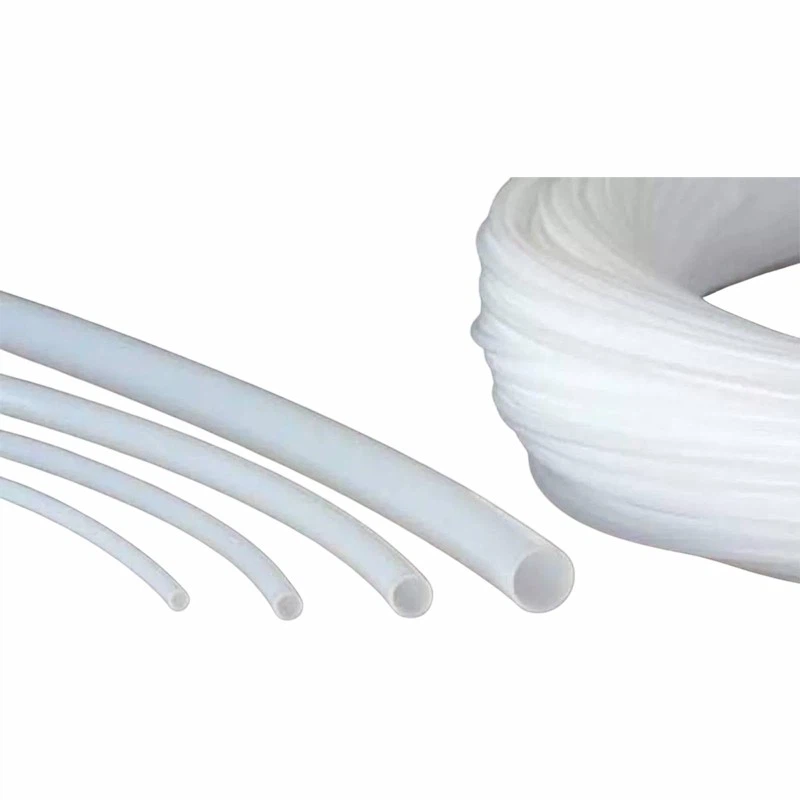
We also offer related PTFE products such as PTFE Tube Fittings, PTFE Film Adhesive Tape, and PTFE Tube. These products are designed to work in harmony with our PTFE films, providing comprehensive solutions for various industries.
Conclusion
The gas permeability of PTFE film is a complex yet important property that is influenced by multiple factors such as molecular structure, film thickness, temperature, and gas type. Understanding this property is crucial for selecting the right PTFE film for specific applications. As a reliable PTFE film supplier, we are committed to providing high - quality products with well - characterized gas permeability. If you are interested in our PTFE film products or have any questions regarding gas permeability, please feel free to contact us for further discussions and procurement negotiations.
References
- "Handbook of Polytetrafluoroethylene (PTFE) and Related Fluoroplastics" by David A. Scola.
- "Gas Permeation Through Polymers" by John Comyn.
- Research papers on PTFE properties and applications in peer - reviewed scientific journals.


