


As a PTFE Skived Film supplier, I've received numerous inquiries about the surface roughness of PTFE Skived Film after treatment. In this blog, I'll delve into this topic, exploring the factors that influence surface roughness, the measurement methods, and the significance of surface roughness in different applications.
Understanding PTFE Skived Film
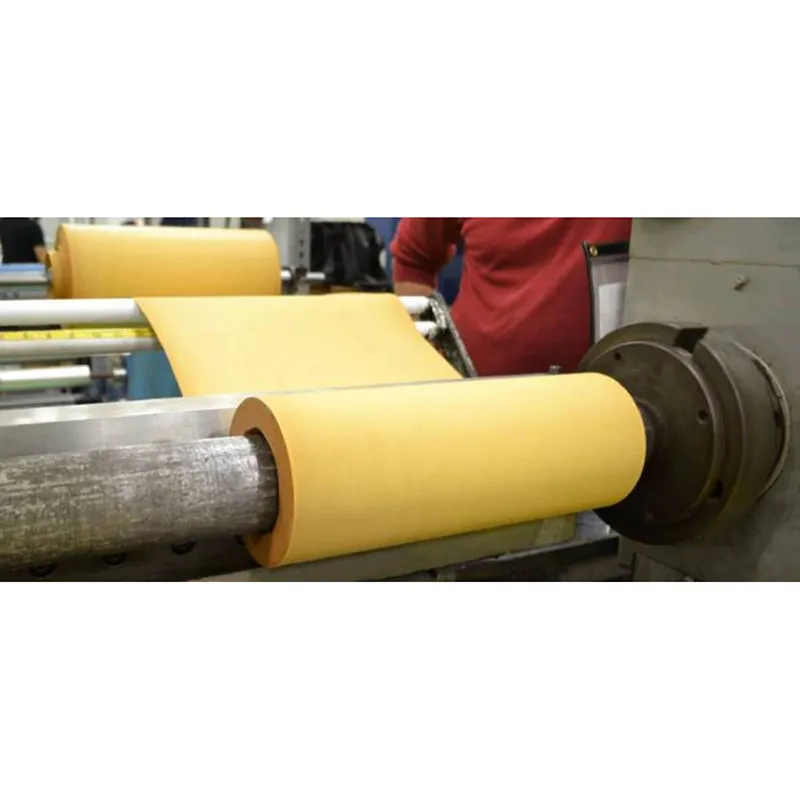
PTFE Skived Film is a versatile material known for its excellent chemical resistance, low friction coefficient, and high temperature resistance. It is produced by skiving a solid PTFE billet, resulting in a thin, continuous film with uniform thickness. The film is widely used in various industries, including electronics, automotive, aerospace, and food processing. You can learn more about PTFE Skived Film on our website.
Factors Affecting Surface Roughness
The surface roughness of PTFE Skived Film after treatment is influenced by several factors, including the skiving process, post-treatment methods, and the quality of the raw materials.
Skiving Process
The skiving process plays a crucial role in determining the initial surface roughness of the film. The sharpness of the skiving blade, the skiving speed, and the pressure applied during skiving can all affect the surface finish. A sharp blade and a slow skiving speed generally result in a smoother surface, while a dull blade or a high skiving speed can lead to a rougher surface.
Post-Treatment Methods
Post-treatment methods, such as heat treatment, chemical treatment, and mechanical polishing, can further modify the surface roughness of the PTFE Skived Film. Heat treatment can improve the crystallinity of the PTFE, resulting in a smoother surface. Chemical treatment can introduce functional groups to the surface, which can affect the surface energy and roughness. Mechanical polishing can physically remove surface irregularities, reducing the surface roughness.
Raw Material Quality
The quality of the raw materials used in the production of PTFE Skived Film also affects the surface roughness. High-quality PTFE resins with uniform molecular weight and low impurity content tend to produce films with smoother surfaces.
Measurement of Surface Roughness
Surface roughness is typically measured using profilometers or atomic force microscopes (AFMs). Profilometers are commonly used to measure the roughness of large surfaces, while AFMs are more suitable for measuring the roughness of small areas or at the nanoscale.

Profilometers
Profilometers work by tracing a stylus across the surface of the film and measuring the vertical displacement of the stylus as it moves. The measured data is then used to calculate various roughness parameters, such as Ra (average roughness), Rz (ten-point height of irregularities), and Rq (root mean square roughness).
Atomic Force Microscopes (AFMs)
AFMs use a sharp tip attached to a cantilever to scan the surface of the film. The interaction between the tip and the surface causes the cantilever to deflect, and the deflection is measured to create a topographical map of the surface. AFMs can provide high-resolution images of the surface roughness at the nanoscale.
Significance of Surface Roughness in Different Applications
The surface roughness of PTFE Skived Film can have a significant impact on its performance in different applications.
Electronics
In electronics, PTFE Skived Film is often used as a dielectric material in printed circuit boards (PCBs) and flexible circuits. A smooth surface is desirable in these applications to ensure good adhesion between the film and the conductive layers, as well as to reduce signal loss due to surface roughness.
Automotive
In the automotive industry, PTFE Skived Film is used in various applications, such as gaskets, seals, and bearings. A rough surface can increase the friction coefficient, leading to increased wear and energy consumption. Therefore, a smooth surface is preferred to improve the performance and durability of these components.
Food Processing
In food processing, PTFE Skived Film is used as a release liner in baking trays, conveyor belts, and other food contact surfaces. A smooth surface is important to prevent food from sticking to the film, making it easier to clean and maintain hygiene. You can explore our PTFE Conveyor Belt for more information on its applications in the food industry.
Medical
In the medical field, PTFE Skived Film is used in applications such as wound dressings, catheters, and surgical implants. A smooth surface can reduce the risk of infection and tissue damage, making it suitable for medical applications. Our PTFE Moisturizing Sleeve Series is designed with a smooth surface for optimal performance in medical applications.
Controlling Surface Roughness
To meet the specific requirements of different applications, it is important to control the surface roughness of PTFE Skived Film. This can be achieved through careful selection of the skiving process parameters, post-treatment methods, and raw materials.
Process Optimization
Optimizing the skiving process parameters, such as blade sharpness, skiving speed, and pressure, can help to achieve the desired surface roughness. Additionally, post-treatment methods, such as heat treatment and mechanical polishing, can be used to further improve the surface finish.
Quality Control
Implementing a strict quality control system is essential to ensure that the surface roughness of the PTFE Skived Film meets the specified requirements. Regular testing and inspection using profilometers or AFMs can help to detect any deviations from the desired roughness and take corrective actions.
Conclusion
The surface roughness of PTFE Skived Film after treatment is influenced by several factors, including the skiving process, post-treatment methods, and the quality of the raw materials. Measuring the surface roughness using profilometers or AFMs is important to ensure that the film meets the specific requirements of different applications. By controlling the surface roughness, we can improve the performance and durability of PTFE Skived Film in various industries.
If you are interested in purchasing PTFE Skived Film or have any questions about its surface roughness or other properties, please feel free to contact us for a detailed discussion and to explore potential business opportunities.
References
- "PTFE Skived Film: Properties and Applications," Plastics Technology, Vol. XX, Issue XX, XX.
- "Surface Roughness Measurement and Characterization," Journal of Surface Science and Technology, Vol. XX, Issue XX, XX.
- "The Effect of Surface Roughness on the Performance of PTFE in Different Applications," International Journal of Materials Science and Engineering, Vol. XX, Issue XX, XX.


